LATEST

Friday, 20 April 2012

How to Close a Deal Like Warren Buffett


Warren Buffett might be catching a lot of flack these days, but I think if you want to know about closing big deals, he's still the guy to watch. Why? The man knows how to talk about money when he's dealmaking.

Buffett is famous for doing ginormous deals with as little information as a few pages of business plans and the standard financials a company would submit to a bank to qualify for a loan. What he has when he goes into any conversation is an encyclopedic knowledge of how businesses work financially. He knows "their money," "their wallet," and how investments and outcomes should work. Follow his lead and you will close more business.

Here are seven things I've learned as I've watched Buffett from afar:

1. Know the other guy's money - How they make it, how they count it, how they spend it. This is obviously much easier to do for publicly traded companies. For privately held companies, the numbers are fairly easy to estimate, at least the cost of goods sold and probably the cost of sale. These numbers are critical to discussing the possibilities of working together. Too often the discussion stops at budget. When you don't know, ask. Not the trade secrets, but at least the industry averages. This provides a basic framework for the discussion.

2. Know the other guy's wallet - How does this sale impact any of these critical numbers? The terms of the deal should be looked at from their side of the table first, then yours.

3. Start discussing the money early - You know you are going to discuss the money later. Early in the conversation, you do not have enough information for precision. Instead, you have an understanding of the economics of the prospect's industry, so you have enough to determine if a deal makes any sense at all. Use that economic information and industry knowledge to frame a shared understanding of the reality of the money for this opportunity.

4. Use ranges to qualify and disqualify - Understand early (and throughout the discussion) whether you and your prospect are in the same arena. By using ranges of prices, cost structures, yields, and performance you can both be sure that you are dealing in a shared reality rather than getting to the end and finding yourselves so far apart that there is permanent damage done to the relationship.

5. Speak the language of investment and outcomes - Every large sale is an investment on both parts in an outcome. When you move the conversation from price to investment and cost to outcomes you are focusing on the business impact rather than budget impact. This is the language of large sales.

6. Don't discount early - I regularly hear fearful "deal makers" use language like, "Let's not let money get in the way of working together." There's a word for this that is not used in polite company. This is the language of discounting before the scope has been clearly defined. The sales person believes that he is being clever by taking money off the table. What he has really done is to take margin off the table, his and his company's margin. If qualifying investment and impact has been made up front, then this point does not need to be made again.

7. Don't negotiate until it's time - Work on the deal points one at a time. Work through the investment and outcome ideas clearly, then negotiate. True, all of these points require negotiation. However, too often the conversation turns to negotiations too early before real scope and deliverables have been defined. Which means that the whole is reduced to the little parts before the shared picture of the whole has been established.

Side Note: I watched a deal unravel recently because the players did not observe these guidelines. The sale involved the installation of a point-of-sale system into a retail chain. The details are complicated as many large deals are, but the numbers were simple:

If you calculated the investment necessary for the system, the transaction cost was going to be >5% of the transaction revenue value. That's more than the cost of the charge card processing fee! Never going to work regardless of the reporting bells and whistles, speed to data consolidation and so on.

This violates rules 1-5. The selling team did not understand the fundamental money issues of their prospect. They had not asked, done their research or even estimated. They were focused on the features of their system and what they had heard the IT people say would be the selection criteria without working through the money issues. That always leads to disaster.


as written by Tom Searchy @ http://www.cbsnews.com/8301-505183_162-46440283-10391735/how-to-close-a-deal-like-warren-buffett/?tag=bnetdomain

Thursday, 12 April 2012

Hustlers vs Entrepreneurs : Which one are you?


Hustlers vs Entrepreneurs.  The two are pretty much the same thing, right? Wrong!  While I would say that it is pretty safe to assume that most entrepreneurs are natural hustlers, I would also say that most hustlers will never become entrepreneurs.  You see, hustlers are missing a few things that entrepreneurs seem to have discovered.

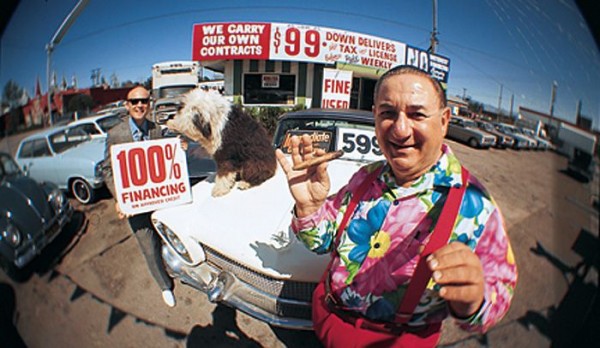
First of all, hustlers lack any real long term vision.  A car salesman is a hustler, the car dealership owner is an entrepreneur.  A person who flips real estate is a hustler, the person who owns apartments and collects cashflow is an entrepreneur. Capital Gains versus Appreciation and cashflow. The guy who sells you stocks is a hustler, the guy whose stock he’s selling because he just had an IPO is an entrepreneur. A consultant and the guy who owns the consulting company. Highest tax bracket versus lowest tax bracket (or even no tax bracket), you get the idea.  A hustler must continue hustling or his income will suffer.  An entrepreneur can pick and choose when to hustle and when to strategize for the future.  Both are after the same thing, financial freedom and wealth, but unfortunately only one will actually accomplish that.  1099 vs Schedule K-1, all you entrepreneurs already know what that means.

Hustling should be a means to an end, not the end itself.  Like I said before, most entrepreneurs were (and actually still are) hustlers, they just evolved and converted their hustle into a system that can attract other hustlers to work in for them.  Making the next sale is what is important to a hustler, building a company and leading his team is what the entrepreneur is focused on.  The entrepreneur builds the system that the hustler works in. Being a hustler is not bad, but for a hustler to not evolve into an entrepreneur is a sad shame.  Sometimes entrepreneurs fall back into the hustler mentality.  Maybe the company had a rough quarter and long term aspirations must be sacrificed in order to make payroll and pay the bills.  Sometimes the entrepreneur may feel that shortcuts need to be made in order to meet short term goals.  I am an entrepreneur that occasionally falls back into “hustler mode”.  If this happens to you too, don’t worry about it too much, just recognize it for what it is, deal with your immediate issues, and then become an entrepreneur again by focusing on long term vision.  Build a better system for that particular issue so that you don’t fall back into this short-sighted thinking (at least for that particular issue) again.  When an entrepreneur is building a startup, he must hustle, but he knows that he must hustle on building his system so he can hire other hustlers to work in the system.  This is why the first year of running a business is critical, you will either develop the system and evolve to becoming an entrepreneur, or you will forever be a hustler.  Mom and Pop store versus Corporation.

At the root of the hustler-entrepreneur dilemma is that one focuses on himself while the other focuses on others.  Being an entrepreneur requires massive humility.  To him, brand equity matters more than a quick buck or commission.  This is where customer service comes into play.  Take, for example, Zappos and a hustler-owned online (or offline) shoe merchant.  Both may carry the same shoes, however, only one has the brand equity required to get away with charging more than the other.  Brand equity, word of mouth, creating a culture of happiness, these are all long term, entrepreneurial assets that Zappos carries over their hustler competitors.  When Zappos screws up an order, they are known to send flowers, gift certificates, or even hand deliver their shoes themselves!  When a hustler screws up an order he moves on to the next customer, leaving the previous one with a bad experience.  You see, the hustler put the almighty dollar ahead of his customer. Having humility, building a system that creates brand equity , these are strange concepts for a hustler who has bills to pay TODAY.  Short term satisfaction is chosen over long term brand building.

The difference between the two examples is “me” versus “my customers”.  Zappos probably loses money on that customer that they just tried to keep happy, but they don’t care because they know it will pay off in the future. Certainly a hustler can make a good (even great) living, but an entrepreneur can achieve financial independence and separate his time from his money-making ability.  A hustler remains prisoner to his own system, and once he stops hustling, he stops earning.  An entrepreneur, once he has built his own system, is able to walk away from it, come back many months later, and find it doing better than before he left.  It is not difficult to see who will reach financial freedom under this model.

I am an entrepreneur with many hustler tendencies who occasionally loses sight of his long-term vision, but always recognizes that and is able to readjust his vision.  I am on a mission to constantly evolve as an entrepreneur, build sustainable business systems, and hire the best hustlers to work for me.  If you are a great hustler, feel free to email me your resume.


Wednesday, 11 April 2012

The Enemy Within


A man was in a bar with his group, when an old friend entered. He had lived his life trying to go down the right path, but to no avail. “I should give him some money”, he thought to himself.

But the friend was now rich, and came to the bar that night just to pay all the debts he had incurred over the years. In addition to repaying the loans given to him, he ordered a round of drinks for everyone.

When asked how he had become so successful, he replied, that until days ago he was living as the “Other”.

“What is the Other?” asked Pilar.

“The Other believes that the obligation of man is to spend a lifetime thinking about how to have security so not to die of hunger when getting old. Therefore, living as the Other you fail to discover that Life also has plans, and they may be different.”

“But there is danger. And there is suffering”, the people said in the bar, who had begun to listen.

“No one escapes the suffering. So it is better to lose a few battles in order to fight for your dreams, then to be defeated without even knowing what you are fighting for. When I discovered this, I woke up determined to be what I always really wanted to be. 

The Other stood there in my room watching.

Although it sought to scare me sometimes, I did not allow it to return. From the moment I pushed the Other out of my life, the divine energy worked its miracles.”


an excerpt from "By the River Piedra I Sat Down and Wept" written by Paolo Coelho 

Wednesday, 22 February 2012

Greatest Love Letter


As you got up this morning, I watched you, and hoped you would talk to me, even if it was just a few words, asking my opinion or thanking me for something good that  happened in your life yesterday. But I noticed you were too busy, trying to find the right outfit to wear. When you ran around the house getting ready, I knew there would be a few minutes for you to stop and say hello, but you were too busy. At one point you had to wait, fifteen minutes with nothing to do except sit in a chair. 


Then I saw you spring to your feet. I thought you wanted to talk to me, but you ran to the phone and called a friend to get the latest gossip instead. I watched patiently all day long. With all your activities I guess you were too busy to say anything to me.


I noticed that before lunch you looked around, may be you felt embarrassed to talk to me, that is why you didn't bow your head. You glanced three or four tables over and you noticed some of your friends talking to me briefly before they ate, but you didn't. That's okay. There is still more time left, and I hope that you will talk to me yet. 


You went home and it seems as if you had lots of things to do. After a few of them were done, you turned on the TV. I don't know if you like TV or not, just about anything goes there and you spend lot of time each day in front of it not thinking about anything, just enjoying the show. I waited patiently again as you watched the TV and ate your meal, but again you didn't talk to me.


Bedtime I guess you felt too tired. After you said good night to your family you popped into bed and fell asleep in no time. That's okay because you may not realize that I am always there for you. I've got patience, more than you will ever know. I even want to teach you how to be patient with others as well. 


I love you so much that I wait everyday for a nod, prayer or thought or a thankful part of your heart. It is hard to have a one-sided conversation. 


Well, you are getting up once again. And once again I will wait, with nothing but love for you. Hoping that today you will give me some time. Have a nice day!


Your friend, ALLAH


PS - Do you have enough time to send this to another person?


Yes, I do Love God. He is my source of existence and Savior. Allah keeps me functioning each and everyday.

Tuesday, 24 January 2012

2012 : Manual for conserving paths


1] The path begins with a crossroads. There you can stop and think what direction to follow. But don’t spend too much time thinking or you’ll never leave the spot. Once you have taken the first step, forget the crossroads forever or you will always torture yourself with the useless question: “did I take the right path?”

2] The path doesn’t last for ever. It is a blessing to travel the path for some time, but one day it will come to an end, so always be prepared to leave it at any moment. Don’t get too used to anything. Neither to the hours of euphoria, nor to the endless days when everything seems so difficult and progress is so slow. Don’t forget that sooner or later an angel will appear and your journey will reach an end.

3] Honor your path. It was your choice, your decision, and just as you respect the ground you step on, that ground will respect your feet. Always do what is best to conserve and keep your path and it will do the same for you.

4] Be well equipped. Carry a small rake, a spade, a penknife. Understand that penknives are no use for dry leaves, and rakes are useless for herbs that are deep-rooted. Know also what tool to use at each moment.

5] The path goes forward and backward. At times you have to go back because something was lost, or else a message to be delivered was forgotten in your pocket. A well tended path enables you to go back without any great problems.

6] Take care of the path before you take care of what is around you. Don’t be distracted by the dry leaves at the edges or by the way that others are looking after their paths. Use your energy to tend and conserve the ground that accepts your steps.

7] Be patient. Sometimes the same tasks have to be repeated, like tearing up weeds or closing holes that appear after unexpected rain. Don’t let that annoy you – that is part of the journey.

8] Paths cross. People can tell what the weather is like. Listen to advice, and make your own decisions. You alone are responsible for the path that was entrusted to you.

9] Nature follows its own rules. In this way, you have to be prepared for sudden changes in the fall, slippery ice in winter, the temptations of flowers in spring, thirst and showers in the summer. Make the most of each of these seasons, and don’t complain about their characteristics.

10] Make your path a mirror of yourself. By no means let yourself be influenced by the way that others care for their paths. You have your soul to listen to, and the birds to tell what your soul is saying. Let your stories be beautiful and pleasant to everything around you. Above all, let the stories that your soul tells during the journey be echoed at each and every second of the path.

11] Love your path. And may the Lord guide you and help you every single day in 2012

Related Posts Plugin for WordPress, Blogger...

Share

Twitter Delicious Facebook Digg Stumbleupon Favorites More