
Showing posts with label Strategy. Show all posts
Showing posts with label Strategy. Show all posts
Wednesday, 5 September 2012

Monday, 3 September 2012
What I Learned from Richard Branson…

I hope you’re great! Just finished an event with Richard Branson in Bucharest (a city known as the “Paris of The East”) and wanted to share my takeaways with you to help you take your career and life to its next level of wow.
Richard was polite and larger than life. A pleasure to share time with. And a man who clearly adores all he does. I encourage you to read his autobiography “Losing My Virginity” as well as his book “Business Stripped Bare” if you haven’t gone through them yet. Uber-inspiring. For people who want to become Remarkable Entrepreneurs – and express their absolute best.
Anyway, I’ll get right into some of my observations as well as the ideas we discussed. Please don’t underestimate the power of these simple ideas – superbly executed, they yield brilliant results.
1. Politeness Matters. As mentioned, Richard Branson was unfailingly polite. He mentioned to me that when he was a kid, if he criticized someone, his mother would make him stand in front of the mirror at home and say, “what you’re seeing in others is really what you’re seeing in yourself. So look in the mirror.” This educated him on the key leadership habit of looking for – and then encouraging – the gifts and talents within other people.
2. Be Massively Independent. When Richard was just four years old, his mother stopped her car and instructed him to find his own way home, over many miles. When he was about 12, she told him to cycle 100 miles to Bournemouth alone, to visit a relative. He expressed to me that these childhood experiences were his mother’s way of growing his self-reliance. And building the invincible inner core that has served him so well as an entrepreneur.
3. Screw It – Just Do It. What makes a great company (and great life) isn’t so much the inspiring idea as the flawless execution around the big idea. As Edison once said: “Genius is 1% inspiration and 99% perspiration.” Richard shared that much of his success came from his philosophy to disregard the naysayers and those telling him his dream was impossible and just get the dream done. (Please remember: the impossible is generally just the untried). This is a man with a giant bias towards action.
4. Lavish Praise on People. I know you know this: the bigger the dream, the more important the team. Having worked with many of the best entrepreneurs in the world, I’ve learned that every single one of them gets that you can’t do it alone. Beautiful to have a brave vision. But the real key is finding the genius-level talent to get that vision delivered into reality. And if all you know how to surround yourself with is mediocre people, you’re destined to experience mediocre results. Richard is brilliant at finding the right people that bring his targets of opportunity to life. And he confirmed that once they are on his team, “I lavish them with praise.” Our takeaway: relentlessly celebrate+develop+inspire your people.
5. Be a Radical Innovator. When he was a young entrepreneur with nothing more than the little college newspaper THE STUDENT, he still showed a lust for disregarding all the rules. He challenged the status quo. And disrupted what was considered normal. An example: he somehow was able to get John Lennon to do an original piece of music for him. He then put the song on a special disc and packaged it into the newspaper, right next to the interview he’d done on the rock ‘n roll legend. At Virgin Records, he recruited the Sex Pistols and reinvented a whole category of music. At Virgin Atlantic, he gave passengers massages on airplanes and dropped them home in limos. And with Virgin Galactic, he’s taking people into space. Very cool. Fantastically bold.
At the Bucharest meeting, he told the 2500+ people in the concert hall that “sometime in your lifetime, every one of you will have visited other parts of the universe.” And I believe it.
6. Build Your Brand. Richard Branson gets branding. He knows what he – and the Virgin name – stands for. Fun. Good Value. Strong customer service. And so at every possible opportunity, he evangelizes all it stands for. Oh, and he’s also clearly a master of getting attention. From hot air balloon adventures that made global news to showing up at a press conference nearly naked to promote Virgin mobile, this Remarkable Entrepreneur gets the value of owning a share of our brain cells.
7. Find Your Necker Island. Get this: Branson paid roughly $300,000 for his beloved Necker Island. He and his then girlfriend Joan were visiting the Caribbean on a getaway. They fell in love with Necker – but it was about $4,000,000. But he wouldn’t give up (let’s never discount the power of a ridiculous amount of persistence around your most closely loved goals). A few months later, the owner needed cash. Branson made his deeply discounted offer. It has served as his retreat away from the world for many years. Here’s the real point: in the world of so much noise and complexity, find your personal retreat (even if it’s an aged wooded bench in a public garden) where you can withdraw to think+create+renew+rest.
8. Lucky Wins. We make luck. Enough said.
9. Don’t Do It If It’s Not Fun. Branson wears a smile pretty much all the time. He laughs naturally. And radiates happiness. Zero doubt: he loves his life – and all that’s in it (George Clooney said he’d swap his life for Richard Branson’s – much to the delight of Richard’s wife). The lesson for us: life’s just too short to be doing work that destroys your soul. This is the best time in the history of the world to become an entrepreneur. Find work you adore. And get busy changing the world with it.
10. With Gifts Come Responsibilities. OK, so Richard Branson’s one of the richest people on the planet. But he gets that being good trumps shiny toys. He mentioned to me that, “with great wealth comes great responsibility.” And so he’s spending a lot of his days evangelizing Virgin Unite, his foundation that helps kids in need. Reminds me of what my amazing father taught me – using the words of the great poet Tagore – growing up: “Robin, when you were born, you cried while the world rejoiced. Son, live your life in such a way that when you die, the world cries while you rejoice.”
So there you go. What the iconic Richard Branson shared with me on a sunny Wednesday in Bucharest. I hope the lessons also serve you well.
as written by Robin Sharma in http://www.robinsharma.com/blog/05/what-i-learned-from-richard-branson/
Friday, 20 April 2012
How to Close a Deal Like Warren Buffett

Warren Buffett might be catching a lot of flack these days, but I think if you want to know about closing big deals, he's still the guy to watch. Why? The man knows how to talk about money when he's dealmaking.
Buffett is famous for doing ginormous deals with as little information as a few pages of business plans and the standard financials a company would submit to a bank to qualify for a loan. What he has when he goes into any conversation is an encyclopedic knowledge of how businesses work financially. He knows "their money," "their wallet," and how investments and outcomes should work. Follow his lead and you will close more business.
Here are seven things I've learned as I've watched Buffett from afar:
1. Know the other guy's money - How they make it, how they count it, how they spend it. This is obviously much easier to do for publicly traded companies. For privately held companies, the numbers are fairly easy to estimate, at least the cost of goods sold and probably the cost of sale. These numbers are critical to discussing the possibilities of working together. Too often the discussion stops at budget. When you don't know, ask. Not the trade secrets, but at least the industry averages. This provides a basic framework for the discussion.
2. Know the other guy's wallet - How does this sale impact any of these critical numbers? The terms of the deal should be looked at from their side of the table first, then yours.
3. Start discussing the money early - You know you are going to discuss the money later. Early in the conversation, you do not have enough information for precision. Instead, you have an understanding of the economics of the prospect's industry, so you have enough to determine if a deal makes any sense at all. Use that economic information and industry knowledge to frame a shared understanding of the reality of the money for this opportunity.
4. Use ranges to qualify and disqualify - Understand early (and throughout the discussion) whether you and your prospect are in the same arena. By using ranges of prices, cost structures, yields, and performance you can both be sure that you are dealing in a shared reality rather than getting to the end and finding yourselves so far apart that there is permanent damage done to the relationship.
5. Speak the language of investment and outcomes - Every large sale is an investment on both parts in an outcome. When you move the conversation from price to investment and cost to outcomes you are focusing on the business impact rather than budget impact. This is the language of large sales.
6. Don't discount early - I regularly hear fearful "deal makers" use language like, "Let's not let money get in the way of working together." There's a word for this that is not used in polite company. This is the language of discounting before the scope has been clearly defined. The sales person believes that he is being clever by taking money off the table. What he has really done is to take margin off the table, his and his company's margin. If qualifying investment and impact has been made up front, then this point does not need to be made again.
7. Don't negotiate until it's time - Work on the deal points one at a time. Work through the investment and outcome ideas clearly, then negotiate. True, all of these points require negotiation. However, too often the conversation turns to negotiations too early before real scope and deliverables have been defined. Which means that the whole is reduced to the little parts before the shared picture of the whole has been established.
Side Note: I watched a deal unravel recently because the players did not observe these guidelines. The sale involved the installation of a point-of-sale system into a retail chain. The details are complicated as many large deals are, but the numbers were simple:
If you calculated the investment necessary for the system, the transaction cost was going to be >5% of the transaction revenue value. That's more than the cost of the charge card processing fee! Never going to work regardless of the reporting bells and whistles, speed to data consolidation and so on.
This violates rules 1-5. The selling team did not understand the fundamental money issues of their prospect. They had not asked, done their research or even estimated. They were focused on the features of their system and what they had heard the IT people say would be the selection criteria without working through the money issues. That always leads to disaster.
as written by Tom Searchy @ http://www.cbsnews.com/8301-505183_162-46440283-10391735/how-to-close-a-deal-like-warren-buffett/?tag=bnetdomain
Thursday, 12 April 2012
Hustlers vs Entrepreneurs : Which one are you?
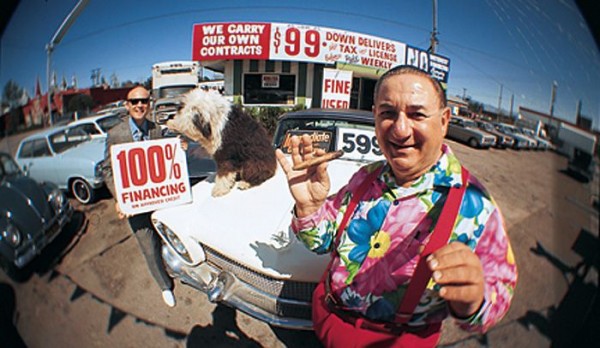
Hustlers vs Entrepreneurs. The two are pretty much the same thing, right? Wrong! While I would say that it is pretty safe to assume that most entrepreneurs are natural hustlers, I would also say that most hustlers will never become entrepreneurs. You see, hustlers are missing a few things that entrepreneurs seem to have discovered.
First of all, hustlers lack any real long term vision. A car salesman is a hustler, the car dealership owner is an entrepreneur. A person who flips real estate is a hustler, the person who owns apartments and collects cashflow is an entrepreneur. Capital Gains versus Appreciation and cashflow. The guy who sells you stocks is a hustler, the guy whose stock he’s selling because he just had an IPO is an entrepreneur. A consultant and the guy who owns the consulting company. Highest tax bracket versus lowest tax bracket (or even no tax bracket), you get the idea. A hustler must continue hustling or his income will suffer. An entrepreneur can pick and choose when to hustle and when to strategize for the future. Both are after the same thing, financial freedom and wealth, but unfortunately only one will actually accomplish that. 1099 vs Schedule K-1, all you entrepreneurs already know what that means.
Hustling should be a means to an end, not the end itself. Like I said before, most entrepreneurs were (and actually still are) hustlers, they just evolved and converted their hustle into a system that can attract other hustlers to work in for them. Making the next sale is what is important to a hustler, building a company and leading his team is what the entrepreneur is focused on. The entrepreneur builds the system that the hustler works in. Being a hustler is not bad, but for a hustler to not evolve into an entrepreneur is a sad shame. Sometimes entrepreneurs fall back into the hustler mentality. Maybe the company had a rough quarter and long term aspirations must be sacrificed in order to make payroll and pay the bills. Sometimes the entrepreneur may feel that shortcuts need to be made in order to meet short term goals. I am an entrepreneur that occasionally falls back into “hustler mode”. If this happens to you too, don’t worry about it too much, just recognize it for what it is, deal with your immediate issues, and then become an entrepreneur again by focusing on long term vision. Build a better system for that particular issue so that you don’t fall back into this short-sighted thinking (at least for that particular issue) again. When an entrepreneur is building a startup, he must hustle, but he knows that he must hustle on building his system so he can hire other hustlers to work in the system. This is why the first year of running a business is critical, you will either develop the system and evolve to becoming an entrepreneur, or you will forever be a hustler. Mom and Pop store versus Corporation.
At the root of the hustler-entrepreneur dilemma is that one focuses on himself while the other focuses on others. Being an entrepreneur requires massive humility. To him, brand equity matters more than a quick buck or commission. This is where customer service comes into play. Take, for example, Zappos and a hustler-owned online (or offline) shoe merchant. Both may carry the same shoes, however, only one has the brand equity required to get away with charging more than the other. Brand equity, word of mouth, creating a culture of happiness, these are all long term, entrepreneurial assets that Zappos carries over their hustler competitors. When Zappos screws up an order, they are known to send flowers, gift certificates, or even hand deliver their shoes themselves! When a hustler screws up an order he moves on to the next customer, leaving the previous one with a bad experience. You see, the hustler put the almighty dollar ahead of his customer. Having humility, building a system that creates brand equity , these are strange concepts for a hustler who has bills to pay TODAY. Short term satisfaction is chosen over long term brand building.
The difference between the two examples is “me” versus “my customers”. Zappos probably loses money on that customer that they just tried to keep happy, but they don’t care because they know it will pay off in the future. Certainly a hustler can make a good (even great) living, but an entrepreneur can achieve financial independence and separate his time from his money-making ability. A hustler remains prisoner to his own system, and once he stops hustling, he stops earning. An entrepreneur, once he has built his own system, is able to walk away from it, come back many months later, and find it doing better than before he left. It is not difficult to see who will reach financial freedom under this model.
I am an entrepreneur with many hustler tendencies who occasionally loses sight of his long-term vision, but always recognizes that and is able to readjust his vision. I am on a mission to constantly evolve as an entrepreneur, build sustainable business systems, and hire the best hustlers to work for me. If you are a great hustler, feel free to email me your resume.
Tuesday, 24 January 2012
2012 : Manual for conserving paths

1] The path begins with a crossroads. There you can stop and think what direction to follow. But don’t spend too much time thinking or you’ll never leave the spot. Once you have taken the first step, forget the crossroads forever or you will always torture yourself with the useless question: “did I take the right path?”
2] The path doesn’t last for ever. It is a blessing to travel the path for some time, but one day it will come to an end, so always be prepared to leave it at any moment. Don’t get too used to anything. Neither to the hours of euphoria, nor to the endless days when everything seems so difficult and progress is so slow. Don’t forget that sooner or later an angel will appear and your journey will reach an end.
3] Honor your path. It was your choice, your decision, and just as you respect the ground you step on, that ground will respect your feet. Always do what is best to conserve and keep your path and it will do the same for you.
4] Be well equipped. Carry a small rake, a spade, a penknife. Understand that penknives are no use for dry leaves, and rakes are useless for herbs that are deep-rooted. Know also what tool to use at each moment.
5] The path goes forward and backward. At times you have to go back because something was lost, or else a message to be delivered was forgotten in your pocket. A well tended path enables you to go back without any great problems.
6] Take care of the path before you take care of what is around you. Don’t be distracted by the dry leaves at the edges or by the way that others are looking after their paths. Use your energy to tend and conserve the ground that accepts your steps.
7] Be patient. Sometimes the same tasks have to be repeated, like tearing up weeds or closing holes that appear after unexpected rain. Don’t let that annoy you – that is part of the journey.
8] Paths cross. People can tell what the weather is like. Listen to advice, and make your own decisions. You alone are responsible for the path that was entrusted to you.
9] Nature follows its own rules. In this way, you have to be prepared for sudden changes in the fall, slippery ice in winter, the temptations of flowers in spring, thirst and showers in the summer. Make the most of each of these seasons, and don’t complain about their characteristics.
10] Make your path a mirror of yourself. By no means let yourself be influenced by the way that others care for their paths. You have your soul to listen to, and the birds to tell what your soul is saying. Let your stories be beautiful and pleasant to everything around you. Above all, let the stories that your soul tells during the journey be echoed at each and every second of the path.
11] Love your path. And may the Lord guide you and help you every single day in 2012
Wednesday, 14 December 2011
Manual for climbing mountains

A] Choose the mountain you want to climb: don’t pay attention to what other people say, such as “that one’s more beautiful” or “this one’s easier”. You’ll be spending lots of energy and enthusiasm to reach your objective, so you’re the only one responsible and you should be sure of what you’re doing.
B] Know how to get close to it: mountains are often seen from far off – beautiful, interesting, full of challenges. But what happens when we try to draw closer? Roads run all around them, flowers grow between you and your objective, what seemed so clear on the map is tough in real life. So try all the paths and all the tracks until eventually one day you’re standing in front of the top that you yearn to reach.
C] Learn from someone who has already been up there: no matter how unique you feel, there is always someone who has had the same dream before you and ended up leaving marks that can make your journey easier; places to hang the rope, trails, broken branches to make the walking easier. The climb is yours, so is the responsibility, but don’t forget that the experience of others can help a lot.
D] When seen up close, dangers are controllable: when you begin to climb the mountain of your dreams, pay attention to the surroundings. There are cliffs, of course. There are almost imperceptible cracks in the mountain rock. There are stones so polished by storms that they have become as slippery as ice. But if you know where you are placing each footstep, you will notice the traps and how to get around them.
E] The landscape changes, so enjoy it: of course, you have to have an objective in mind – to reach the top. But as you are going up, more things can be seen, and it’s no bother to stop now and again and enjoy the panorama around you. At every meter conquered, you can see a little further, so use this to discover things that you still had not noticed.
F] Respect your body: you can only climb a mountain if you give your body the attention it deserves. You have all the time that life grants you, as long as you walk without demanding what can’t be granted. If you go too fast you will grow tired and give up half way there. If you go too slow, night will fall and you will be lost. Enjoy the scenery, take delight in the cool spring water and the fruit that nature generously offers you, but keep on walking.
G] Respect your soul: don’t keep repeating “I’m going to make it”. Your soul already knows that, what it needs is to use the long journey to be able to grow, stretch along the horizon, touch the sky. An obsession does not help you at all to reach your objective, and even ends up taking the pleasure out of the climb. But pay attention: also, don’t keep saying “it’s harder than I thought”, because that will make you lose your inner strength.
H] Be prepared to climb one kilometer more: the way up to the top of the mountain is always longer than you think. Don’t fool yourself, the moment will arrive when what seemed so near is still very far. But since you were prepared to go beyond, this is not really a problem.
I] Be happy when you reach the top: cry, clap your hands, shout to the four winds that you did it, let the wind – the wind is always blowing up there – purify your mind, refresh your tired and sweaty feet, open your eyes, clean the dust from your heart. It feels so good, what was just a dream before, a distant vision, is now part of your life, you did it!
J] Make a promise: now that you have discovered a force that you were not even aware of, tell yourself that from now on you will use this force for the rest of your days. Preferably, also promise to discover another mountain, and set off on another adventure.
L] Tell your story: yes, tell your story! Give your example. Tell everyone that it’s possible, and other people will then have the courage to face their own mountains.
taken from “LIKE THE FLOWING RIVER” (Kindle Edition) by Paolo Coelho
Saturday, 8 October 2011
How to Pitch a VC: 5 Tips from ‘Shark Tank’

By Steve Strauss | October 3, 2011
What does it take to not only get the attention of VCs, but actually get them to invest in your business? This, of course, is a question that vexes many an entrepreneur. Sure, you can read books and articles and watch videos, but let me suggest a different path:
Watch TV.
Specifically, turn on the show “Shark Tank” on Friday nights. If you have never seen it, here’s a quick recap: Entrepreneurs and inventors come before a panel of multi-millionaires and billionaires (like Mark Cuban and Barbara Corcoran) and pitch their businesses. If the sharks (the investors) like the idea and think it is a market-worthy product, they will offer the entrepreneur some or all of the money the person is seeking in exchange for an equity stake in the business. If they strike a deal, the shark and the entrepreneur are in business together.
It’s fascinating to watch, from both perspectives. Sometimes you see entrepreneurs go up there with a dynamite idea but no clue how to execute on it. Or they have no sales or no team. Sometimes the sharks battle each other for a piece of the pie when an idea seems too big to miss such as Toygaroo, a company that rents toys to parents of young kids for a monthly fee — sort of like Netflix for toys. Brilliant.
But for us entrepreneurs in the audience there are a lot of lessons on how, and how not, to approach and get money from a VC. Here are five:
1. Know your numbers cold and be able to back them up: How many times have I seen someone on the show come in and say they need, say, “$100,000 for a 10% stake in my company”? The sharks immediately note that that means the entrepreneur values the company at $1 million. They ask:
What sales do you have to back that up?
What assets do you have?
What is your profit margin?
If the entrepreneur has no proof that the business is really worth what he says it is, then it’s over. Know your numbers.
2. Have some sort of secret sauce: There is no shortage of great ideas out there. What distinguishes yours? Why should a VC invest in your idea over the hundreds of others he or she sees every year? You have to offer something different and special and unique.
As one of the sharks, billionaire Kevin Harrington says, “A good business idea is a product or service that solves a problem that is not already being solved in the marketplace. The product or service should be unique enough that it’s not something already readily available.”
3. Have a great team: VCs love to see that you have surrounded yourself with people who can execute on the plan, and who have experience and a can-do attitude. That said, Barbara Corcoran notes, “Always choose attitude over experience. When I hire people I make a habit of never looking at their resume because most people spend most of their life in the wrong job. I never hire complainers or excuse-makers because they’ll find a way within my company to do more of the same. People with a can-do attitude are a pleasure to work with.”
4. Put your best foot forward: Not a few times on the show have the sharks said that they are investing in the person more than the idea. You have to come to the meeting with the VC and be impressive — a leader, a visionary, articulate, confident, and bold, all rolled into one.
Again, Barbara Corcoran is instructive, “My most important criteria when making the decision to invest are: 1) Do I trust the individual? and 2) Do they have the fire in their belly to bring the business to the finish line?”
5. Show them the money. Investors invest to make a profit. Be able to prove that you will make them a big one.
In the end, whether you get the money or not, depends on all of these things. Harrington puts it this way: “Your presentation needs to convince potential investors and business partners that you know what you are doing, have a background in your business, and have put together a good team. It’s important that you show them as little risk as possible, and convince them that they will not only get their money back, but also a high return on investment.”
- original link -
6 Lessons We Could Learn from Steve Jobs

By Margaret Heffernan | October 6, 2011
Tracking the achievements of Steve Jobs isn’t a difficult thing to do. They’re big, public and - especially in technology - remarkably long lasting. More tricky but, I think, more interesting, is eliciting from those achievements the lessons we could learn from his successes if we tried.
1. Style is Content
From the outset, Jobs and Apple believed in style: in fonts, in graphics, in industrial design and in marketing. It’s easy to under-estimate how eccentric this was at the time - and how eccentric it remains today. While most organizations believe that style is the exclusive purview of marketing, few achieve it even there. Most hardware and software remains remarkably clunky, ugly or simply derivative. (The Kindle is hideous; the Fire a pale imitation.) When I first started working in technology 15 years ago, style was dismissed as frivolous and that’s the status it still holds in most companies today. Anyone who imagines that Apple’s success derives entirely from what’s inside the box (and there are more than a few) has missed a very obvious point.
Conventional wisdom divides thinking into the left brain and the right brain. The left is all systematic, rational, linear while the right is more emotional and creative. What Jobs demonstrated was that success lies not in emphasizing one over the other but in bringing them together. The physical representation of this was clear when he took over Pixar. The new campus planned 3 separate buildings: for creatives, for producers and for business people. He insisted that they be brought under one roof, with toilets at the center - because that’s where everyone meets and talks.
2. Patience Beats Speed
For all that Apple is known for fast product development, the truth is that Jobs was very good at waiting. After his return to Apple in 1997, when the company teetered on the brink of bankruptcy, he did what any smart CEO would do: slashed product lines (15 desktop models to 1) cut software and hardware engineers, eliminated peripherals, reduced inventory and retailers and moved most manufacturing offshore. There is nothing brilliant about this; it’s textbook stuff. But asked in 1998, by Richard Rummelt, what he was going to do next, in order to move Apple beyond its fragile niche position, Jobs had a gutsy answer: “I am going to wait for the next big thing.”
Wait? In a technology business? That took courage. Of course, once he’d figured out what the next big thing was, Jobs was methodical and patient - again - in putting in place everything he’d need to take advantage of the seismic shift in the environment when the U.S. market moved to broadband.
It’s also worth remembering that, during the three years he did this, he was remorselessly hammered by industry analysts not one of whom understood what he was up to.
3. Drama Trumps Romance
Jobs’s product launches were famed for their drama. But one thing they didn’t offer was romance. The products did what they said they’d do. Marketing commentary around them didn’t promise fantasies, illusions or daydreams. Apple promoted its products but didn’t hype them. This may seem a lackluster quality but it built trust. Apple said its products were easy to use not because (like many of its competitors) it hoped that was true, or because it was true for the PhD engineers who’d invented them, but because it was true. It seems peculiar to celebrate a company for truth in advertising but that’s one reason why Apple customers, once smitten, stayed loyal.
4. Nothing Beats a Good Mistake
Jobs’s career isn’t without its mis-steps. Losing control of Apple was the biggest and most obvious but there were plenty of minor slip ups along the way. The suicides at the Foxconn plant that manufactures iPhones was just one of these. But Jobs didn’t try to deny that they had taken place or that they mattered. He was swift to point out that Apple’s scrutiny of its suppliers was more rigorous than most - but he still moved quickly to understand what was going on and try to find remedies.
Every company makes mistakes. But, treated right, they can be treasure troves of learning. Moreover, people loved Jobs not because he didn’t make mistakes - but because he learned from them.
5. Technology Isn’t All About Youth
In the age of fast companies, built not to last, Apple offered ample proof that you can be innovative and cool after the age of 25. Experience, know how and skills counted for something. While the products were cool, they weren’t all built by pre-adolescents oblivious to the constraints and needs of normal human beings. That Jobs continued to be as innovative in his 50s as he had been in his 20s is something most companies should take time to consider at length.
6. Business Doesn’t Have to Be Bad
Earlier this week I was teaching a class of new MBA students. A strikingly international group, they came from Thailand, India, Korea, Colombia, Russia, Canada, Taiwan, China and the U.S. I asked them who their heroes were. As usual, the list included their parents, various heads of state and Nelson Mandela. But topping the list - regardless of age or nationality - was Steve Jobs. More than anyone else alive, he was the person who inspired their love of business and their desire to try their hands at it.
In an age when the streets are full of anger and violence at the havoc wreaked by one part of the business world, that there is such an inspirational figure as Jobs is important. We need smart men and women, young and old, to have high ambitions for the world of work, someone who believed passionately and articulated brilliantly how much good business can achieve. Now that Jobs is gone, who can fail to be concerned that no one else adequately represents his rich synthesis of intellect, imagination and passion?
The lessons we could learn from Steve Jobs aren’t all that remarkable. Many of them contain wisdom that we already know — we just don’t apply it. Why not? Is it that we lack courage? Or is it that we find it hard to believe that tenets so simple can prove so effective? Surely that’s the moral of the Apple story: there is genius in simplicity. But simple is hard.
- original link -
Sunday, 2 October 2011
How To Be An Entrepreneur

Whilst the ultimate desire for any Muslim is success in the Hereafter, the Qur’an also teaches prayers for success in this world. Before beginning a new series on Global Muslim entrepreneurs, emel looks at the attributes that a Muslim entrepreneur should be striving for in their business.
Faith in Trade
The Qur’an has many verses extolling the virtues of trade, and the Prophet has said that nine-tenths of all rizq (material provision) is derived from commerce. He himself led trade missions to al-Sham, including for the businesswoman Khadijah bint Khuwaylid (later to become his wife). Extensive trade networks created a medium through which Islam spread peacefully, initially through the merchant class and then into the general population. Indeed, it can be said that trade flows within the veins of the Islamic culture and narrative. Given that commerce is crucial for a thriving country, with small businesses today providing the engines that power economies - creating jobs, fuelling growth and transforming communities - it is vital that young Muslim entrepreneurs take up the mantle of commerce, and begin to harness the faith-based enthusiasm for trade.
Win Win
The best deals are when the principle of ‘Win, Win’ is adhered to. Both parties should come out of a deal feeling happy. If one party feels they have given too much, or not received enough, then it is not a good deal. The ability to make such a deal requires the development of mutual respect and care. The Prophet said, “None of you truly believes until he loves for his brother what he loves for himself,” and such an attitude in business will lead to a positive reputation.
Business plan
Writing a business plan will allow you to identify the strengths and weaknesses of your idea and clearly assess and evaluate the proposition. Whilst the Qur’an reminds us that “God is the best of planners”, that doesn’t mean we shouldn’t plan; indeed, the Prophet was clear that people had to fulfil their responsibilities towards stable action, reminding his followers to, “Have faith in God and tie up your camel.” A business plan, however sketchy, is essential to the entrepreneur. For a start-up, it should look at the projected outgoings and projected income; and give a best guess assessment of “break even”.
Success and Failure
Success is generally defined in terms of achieving goals, acquiring wealth, having prestige, status, and power; however, there is a reason why the muezzin calls out “Come to success” when he calls people to prayer; for the success of any individual is ultimately their capacity to worship God. The Qur’an says, “I have only created jinn and mankind that they may worship Me.” As this is the purpose of human beings, success can only be through this. That is not to say that the pursuit of worldly success is wrong, it’s just that one has to recognise that it is not our ultimate purpose. In addition, whilst recognising that provision is from God, for the Qur’an says, “And God provides provision to whom He wishes without any account”, the Prophet made clear that believers had to “Spread out your goods and services, and seek provision from your Lord.
Want and Need
Often, business models are about creating want and desire in the consumer. Advertising is the public face of that, and billions of pounds are spent on marketing that is not necessarily connected to substance. The business model of a Muslim entrepreneur has to be more than creating consumer goods based upon consumer desire, and projects with social – not just economic – utility should be supported. Businesses that provide social enrichment and don’t just satisfy consumer desire, but rather build social capital are long-term winners.
Keep it Halal
The Prophet said, “When God prohibits a thing He prohibits the price of it as well,” meaning that one cannot trade in forbidden things. Alcohol, drugs, gambling, pork products, pornography, etc are all obviously prohibited ways of earning a living. The Prophet also forbade transactions involving unspecified quantity, so for example one cannot sell ‘fish in the river’, ‘birds in the air’. A Muslim entrepreneur should refrain from hoarding items hoping to make a higher profit at a later date; and selling items based upon fraudulent claims is also forbidden, as is of course, dealing in usury.
Brand values
Big business always talks about “brand values”, but what is good for the corporate also holds true for the small enterprise. In addition to finding the unique selling point (USP) of your brand, Muslim entrepreneurship should have trust, justice, and integrity at the core of their brand values. The Qur’an reminds the believer that “justice is closest to God consciousness” and tells the reader to “Give full measure and full weight in justice, and wrong not people in respect of their goods” and “Oh you who believe! Eat not up each other’s property by unfair and dishonest means.” Add ihsan, excellence, to the brand for “God has prescribed excellence in all things”, and the Muslim entrepreneur is well on the way to creating a long-lasting, sustainable brand.
Balance
Islam is profoundly about mizan, balance; and the Qur’an describes the Muslim community as “a middle nation to act as witnesses unto mankind, and the Prophet to act as a witness unto you.” As such, there should be balance in all things, including entrepreneurship. Therefore, a Muslim entrepreneur should establish balance between work and family life, between profit and sustainability, between passion and pragmatism.
Going Green
There are natural synergies between the Muslim Lifestyle Economy and the ethical lifestyle economy. Muslim entrepreneurship needs to have the vision to perceive those synergies and then implement them. The Qur’an describes humanity’s stewardship of this world, and those in business have a great responsibility to make sure their products and services are sustainable from an environmental as well as commercial perspective.
Friday, 26 August 2011
Why You Should NEVER Hire a Social Media Manager

This could be a very controversial post for many, however this must be pointed-out. It seems like social media "gurus" are a dime a dozen in today's time. In lieu of this, businesses must be extremely cautious about who they select based on the results they're seeking.
Listed below, are three reasons you NEVER want to hire a conventional social media manager.
1) A large majority of all social media managers have no experience building a brick-and-mortar business or a highly profitable online company using the web and social media.
How can you expect a person (or company) to help you substantially grow your business with the internet when they don’t actually have experience personally doing it? Just a word of wisdom. Do not even think of hiring someone that doesn’t have a long personal track record of success.
I should hope that’s a bit of common sense.
In reality, most individuals waste time with social media and only a tiny fraction of businesses actually generate worthwhile income with it. You'll find that with inexperience comes poor strategy and consistent obstacles.
I'm reminded of a quote…. “You can either make friends with social media or you can make money, but you can't do both.”
2) Expect to pay a lofty premium if you’re going to hire a person with a bunch of experience.
Now, I should point-out, there IS a time and place to pay a high premium. Price should not be the deciding factor, the proven results-based track record should. You will pay for quality most of the time.
The ballpark average experienced social media manager salary (if they’re worth anything) starts at over RM70,000 per year. Remember, this is an employee you’re bringing-in to your organization, not an entrepreneur with a strong eye towards growth.
I'm sure you'd agree, employees need guidance in most cases. They don't just take the baton and run with it.
For the average small business owner, paying over RM6,000 per month isn't feasible, especially when your company is forced to commit to a six month contract or more.
A big corporation will easily invest this amount monthly but it's not advisable for other businesses doing under a half a million per year. Don't count on finding someone off of Craigslist to make the marketing profitable and effective, too.
Far too many companies do this and they end up guessing at why “social media does not work.” The reality is, social media works, it’s just that your strategy sucks.
Managing social media is one aspect. Aggressively growing your company is another.
3) Your social media manager will not have enough time in the day to do everything that needs to be completed. In order to be successful, you should have the following online marketing methods working for you around the clock:
- Keyword and market research
- Facebook organic marketing
- Facebook ads (ppc) marketing
- Online video creation
- Online video submission / optimization
- Podcast creation / submission
- Search Engine Optimization (SEO)
- Articles written and submitted to top directories
- Press releases written and submitted online
- Google Places optimization
- Blog creation and post updates regularly
- Backlink building
- Directory submissions
- Google organic marketing
- Google Adwords PPC management / optimization
- Automated reports generated to track results
In truth, it’s practically impossible to find a social media manager that has experience doing everything listed above. If you can, you'll pay a big premium. Realistically, you need to have a TEAM of experts working on your behalf.
Social media is just one piece of the internet marketing arsenal. If you leave-out the rest you won’t get very far. Knowing these 3 key points, you now have a simple choice to make.
Would you rather pay an inexperienced social media manager RM70K+ per year to “try” to build your business with Facebook, YouTube, Twitter, etc..?
OR…
Would you rather hire a specialized team of experts with a time-tested strategy (at a small fraction of the cost) that has experience selling MILLIONS of dollars worth of products / services from the web?
If you’re smart, committed to business growth, and choose the latter, I have access to one of the best specialized team of experts in Online Marketing and Social Media in Malaysia and I might be able to arrange for a FREE 1 hour consultation with the experts for you. Just drop me an email.
Wednesday, 17 August 2011
Social Media - Why should you care?

Social Media, why should you care? Here's why!
• 1 in every 13 people on earth is on facebook.
• 140Million is the average number of tweet people send per day in February 2011
• Together, we spend 2.9Billion hours on youtube in a month. Thats 326,294 years!
Social media sites allow us to connect quickly and stay connected to people and brands faster than ever before, which means we form closer relationships and have quick access to new people and opportunities.
Unfortunately, too many businesses still don’t understand how to effectively use social media and therefore making a mistake of thinking it as just another marketing channel. These businesses are missing a tremendous amount of opportunity and keeping their business from reaching its full potential.
The truth is Social Media is more than just another marketing channel. Social Media can produce an excellent return for businesses which are willing to use it and take advantage of the tools available. It's free exposure, and often organizations fail to intentionally plan their message as they would for an expensive ad campaign. Social Media strategies must be well thought out and planned prior to execution. Never try to run before you learned to walk.
Consider this: In 2010, Nielsen and Facebook did a joint study on the effect of social media for enterprise using the benchmarks: Ad recall, brand awareness, and purchase intent. Social media had significantly better results than traditional marketing.
Social media is permission based engagement - it is the most effective way to engage people and receive measurable results. When someone gives an organization permission to speak to them, the organization's messaging must be "on" 100% of the time. It's like dating, an organization must woo, cultivate, and meet the needs of their network.
The following rules apply to almost every social media user who seeks to develop a platform, client acquisition, increased sales, and better brand awareness.
1. Social media is relational, not transactional. Keep the "keys" to the social media account away from the Sales department. Traditional marketing has no place in social media. Overtly trying to sell a product or service will quickly damage a social media reputation (reputation is quickly damaged and long to repair).
2. An organization should focus on engagement and not on numbers. There is significantly more value in having a smaller network of followers who engage on a regular basis than to have a large network of followers who view your page once and are done. Get connected with your network. A single engaged user is worth more than one hundred unused or phantom accounts.
3. Define your core audience and identify your area of expertise. Do not try to be all things to all people. If you want to reach the decision makers in organizations, you may design your social media messaging and expertise around content that educates about organizational development, as an example. It does not sell your product or service in a direct or traditional way. But the decision makers who follow will begin to view an organization as an expert in their particular area of interest, they will click on links when enough credibility is built and they will share the content. In time, they will take the initiative to find out more about the organization including what products and services are offered. The trust built in social media will transfer to trust in the product or service.
4. Content is king. Posts should add value to followers free of charge, no gimmicks and no strings attached - they may provide information, best practices, or free resources. Develop free resources to give away on a website or blog. While posts should provide stand-alone content, most should include a link providing the user an opportunity to find out more.
5. Updates should be consistent and frequent. Social media is always on and so should an organizations presence. Social media management is not a job relegated to weekdays between 8 and 5. It takes time and consistent impressions with other users to build the credibility needed for them to engage. Posts should be daily and typically should occur a few times and not more than 8 or 9 (depending on the network). When there are dark periods (a day or more without updates) followers get dubious, brand awareness fades, and credibility that has been built diminishes.
6. A Social Media platform must be manifested. Social media streams and accounts should be integrated into every page of an organizations website and communication including "like," "tweet," and "follow" buttons. Clients and followers cannot evangelize if an organization doesn't provide them with the tools to do so.
7. A Profile must be Perfect. The profile is the most viewed page and too often the most neglected. Users decide whether or not to follow an account based on it.
8. Organizations must have a dedicated social media evangelist. Hire an Expert! An organization should have an independent social media specialist who reports directly to an executive on the leadership team. The social media manager should not be accountable to a supervisor who is commissioned or expected to generate a sales quota. They should be the keeper of the keys and the protector of an organization's network of followers. Because social media is incredibly fluid and changes at the speed of light, this person should have a natural proclivity toward Web 2.0, much like a surgeon, always reading, learning, and staying up to date. They should be fluent in related technology in order to track and report on the efficacy of the organization's social media platform so as to assign metrics by which to assess and respond quickly.
Social Media is a complex and evolving medium that many businesses struggle to figure out. Few find quantifiable success with it, many have failed, and most have yet to truly form a social media strategy.
The best advice I can give is to engage with the social media experts. I have access to one of the best Online Marketing and Social Media Experts in Malaysia. And if you are interested to form a social media strategy that creates result for your business, I will be able to assist you by arranging a FREE 1 hour consultation with the experts. Just drop me an email.
Now that you have known the why, the how and the who in social media marketing strategies, So, let's get Social!
** The original article was posted by Joshua Leatherman on Social Media Today
Tuesday, 9 August 2011
Venture Capital – Knowing Your Funding Options

Entrepreneurs and business experts have defined venture capital as a financing style between a capitalist and entrepreneur with a common goal of a handsome return in a short period of time, maybe 3 to 5 years. But while there are several resources on the definition and characteristics of this topic, few have actually discussed the options that this kind of business set-up has.
Before taking the plunge, know what these options are and how they can be applied to your current business plan.
The funding option depends on the stage of the company's progress. Investment firms can invest from $50,000 up to $20 Million. If the company is still at its earliest stage, where a concept or invention is still to be developed or proved, the option is called seed financing. Here investment is spent on marketing and product development. Product ingenuity and market research are the areas being focused.
When the company has already developed its product and marketing strategy but needs money for the actual production and initial marketing, the funding option is called start-up financing. This is the common option for new entrepreneurs and inventors. Here funds are spent for the production and initial marketing. Amounts can range from $50,000 to $1 Million.
Sometimes a company already has its products and may have initially introduced them to the market, but receives little or no revenue at all. In this case, the entrepreneur may need financial assistance at this stage, called the first or early stage. The amount usually ranges from $500,000 up to $15 Million, depending on the extent of the changes that need to be made. It could be that the product needs to be revised or developed to make it more saleable, or it can be a mere repackaging or change in advertising strategy.
The next option is called the second or later stage. Here the company has its products and may have received revenues, and has the potential of making it big in the near future, but for some reason has no funds at hand. It could be that there are some loans that need to be paid, or other financial schemes that need to be complied with. That is why venture capital firms invest from $2-15 Million to help the company.
Some profitable companies want to expand, but does not want to put in more capital out of their own money. Their goal is not to keep the company for many years but for it to quickly grow in order to make an IPO within a few months, say 3-18 months. This option is called the third or mezzanine stage. Amounts range from $2 Million to $20 Million.
Similarly, this next option needs an investment before an IPO, but the time frame is within 3-12 months. This is called the bridge. Investment is also between $2 Million to $20 Million.
Remember that there is a specific option for each stage that your company has. The key is to know what options to use. Similarly, you must know where to find these venture capital firms. You must also develop a concise but comprehensive business proposal to present to them. Lastly, keep in mind that venture capital is not the end-all but just the beginning of more challenging things to come.


