LATEST

Showing posts with label Great Thinkers. Show all posts

Saturday, 15 September 2012

10 Lessons from Einstein


1. Follow Your Curiosity “I have no special talent. I am only passionately curious.”

2. Perseverance is Priceless “It’s not that I’m so smart; it’s just that I stay with problems longer.”

3. Focus on the Present “Any man who can drive safely while kissing a pretty girl is simply not giving the kiss the attention it deserves.”

4. The Imagination is Powerful “Imagination is everything. It is the preview of life’s coming attractions. Imagination is more important than knowledge.”

5. Make Mistakes “A person who never made a mistake never tried anything new.”

6. Live in the Moment “I never think of the future – it comes soon enough.”

7. Create Value “Strive not to be a success, but rather to be of value.”

8. Don’t be repetitive “Insanity: doing the same thing over and over again and expecting different results.”

9. Knowledge Comes From Experience “Information is not knowledge. The only source of knowledge is experience.”

10. Learn the Rules and Then Play Better “You have to learn the rules of the game. And then you have to play better than anyone else.”

Monday, 3 September 2012

What I Learned from Richard Branson…


I hope you’re great! Just finished an event with Richard Branson in Bucharest (a city known as the “Paris of The East”) and wanted to share my takeaways with you to help you take your career and life to its next level of wow.

Richard was polite and larger than life. A pleasure to share time with. And a man who clearly adores all he does. I encourage you to read his autobiography “Losing My Virginity” as well as his book “Business Stripped Bare” if you haven’t gone through them yet. Uber-inspiring. For people who want to become Remarkable Entrepreneurs – and express their absolute best.

Anyway, I’ll get right into some of my observations as well as the ideas we discussed. Please don’t underestimate the power of these simple ideas – superbly executed, they yield brilliant results.

1. Politeness Matters. As mentioned, Richard Branson was unfailingly polite. He mentioned to me that when he was a kid, if he criticized someone, his mother would make him stand in front of the mirror at home and say, “what you’re seeing in others is really what you’re seeing in yourself. So look in the mirror.” This educated him on the key leadership habit of looking for – and then encouraging – the gifts and talents within other people.

2. Be Massively Independent. When Richard was just four years old, his mother stopped her car and instructed him to find his own way home, over many miles. When he was about 12, she told him to cycle 100 miles to Bournemouth alone, to visit a relative. He expressed to me that these childhood experiences were his mother’s way of growing his self-reliance. And building the invincible inner core that has served him so well as an entrepreneur.

3. Screw It – Just Do It. What makes a great company (and great life) isn’t so much the inspiring idea as the flawless execution around the big idea. As Edison once said: “Genius is 1% inspiration and 99% perspiration.” Richard shared that much of his success came from his philosophy to disregard the naysayers and those telling him his dream was impossible and just get the dream done. (Please remember: the impossible is generally just the untried). This is a man with a giant bias towards action.

4. Lavish Praise on People. I know you know this: the bigger the dream, the more important the team. Having worked with many of the best entrepreneurs in the world, I’ve learned that every single one of them gets that you can’t do it alone. Beautiful to have a brave vision. But the real key is finding the genius-level talent to get that vision delivered into reality. And if all you know how to surround yourself with is mediocre people, you’re destined to experience mediocre results. Richard is brilliant at finding the right people that bring his targets of opportunity to life. And he confirmed that once they are on his team, “I lavish them with praise.” Our takeaway: relentlessly celebrate+develop+inspire your people.

5. Be a Radical Innovator. When he was a young entrepreneur with nothing more than the little college newspaper THE STUDENT, he still showed a lust for disregarding all the rules. He challenged the status quo. And disrupted what was considered normal. An example: he somehow was able to get John Lennon to do an original piece of music for him. He then put the song on a special disc and packaged it into the newspaper, right next to the interview he’d done on the rock ‘n roll legend. At Virgin Records, he recruited the Sex Pistols and reinvented a whole category of music. At Virgin Atlantic, he gave passengers massages on airplanes and dropped them home in limos. And with Virgin Galactic, he’s taking people into space. Very cool. Fantastically bold.

At the Bucharest meeting, he told the 2500+ people in the concert hall that “sometime in your lifetime, every one of you will have visited other parts of the universe.” And I believe it.

6. Build Your Brand. Richard Branson gets branding. He knows what he – and the Virgin name – stands for. Fun. Good Value. Strong customer service. And so at every possible opportunity, he evangelizes all it stands for. Oh, and he’s also clearly a master of getting attention. From hot air balloon adventures that made global news to showing up at a press conference nearly naked to promote Virgin mobile, this Remarkable Entrepreneur gets the value of owning a share of our brain cells.

7. Find Your Necker Island. Get this: Branson paid roughly $300,000 for his beloved Necker Island. He and his then girlfriend Joan were visiting the Caribbean on a getaway. They fell in love with Necker – but it was about $4,000,000. But he wouldn’t give up (let’s never discount the power of a ridiculous amount of persistence around your most closely loved goals). A few months later, the owner needed cash. Branson made his deeply discounted offer. It has served as his retreat away from the world for many years. Here’s the real point: in the world of so much noise and complexity, find your personal retreat (even if it’s an aged wooded bench in a public garden) where you can withdraw to think+create+renew+rest.

8. Lucky Wins. We make luck. Enough said.

9. Don’t Do It If It’s Not Fun. Branson wears a smile pretty much all the time. He laughs naturally. And radiates happiness. Zero doubt: he loves his life – and all that’s in it (George Clooney said he’d swap his life for Richard Branson’s – much to the delight of Richard’s wife). The lesson for us: life’s just too short to be doing work that destroys your soul. This is the best time in the history of the world to become an entrepreneur. Find work you adore. And get busy changing the world with it.

10. With Gifts Come Responsibilities. OK, so Richard Branson’s one of the richest people on the planet. But he gets that being good trumps shiny toys. He mentioned to me that, “with great wealth comes great responsibility.” And so he’s spending a lot of his days evangelizing Virgin Unite, his foundation that helps kids in need. Reminds me of what my amazing father taught me – using the words of the great poet Tagore – growing up: “Robin, when you were born, you cried while the world rejoiced. Son, live your life in such a way that when you die, the world cries while you rejoice.”

So there you go. What the iconic Richard Branson shared with me on a sunny Wednesday in Bucharest. I hope the lessons also serve you well.


Abdur Rahman ibn Awl


He was one of the first eight persons to accept Islam. He was one of the ten persons (al-asharatu-l mubashshirin) who were  assured of entering Paradise. He was one of the six persons chosen by Umar to form the council of shura to choose the  Khalifah after his death. 

His name in Jahiliyyah days was Abu Amr. But when he accepted Islam the noble Prophet called him Abdur-Rahman - the  servant of the Beneficent God. 

Abdur-Rahman became a Muslim before the Prophet entered the house of al-Arqam. In fact it is said that he accepted Islam  only two days after Abu Bakr as-Siddiq did so. 

Abdur-Rahman did not escape the punishment which the early Muslims suffered at the hands of the Quraysh. He bore this  punishment with steadfastness as they did. He remained firm as they did. And when they were compelled to leave Makkah  for Abyssinia because of the continuous and unbearable persecution, Abdur-Rahman also went. He returned to Makkah when  it was rumored that conditions for the Muslims had improved but, when these rumors proved to be false, he left again for  Abyssinia on a second hijrah. From Makkah once again he made the hijrah to Madinah. 

Soon after arriving in Madinah, the Prophet in his unique manner began pairing off the Muhajirin and the Ansar. This  established a firm bond of brotherhood and was meant to strengthen social cohesion and ease the destitution of the  Muhajirin. Abdur-Rahman was linked by the Prophet with Sad ibn ar-Rabi'ah. Sad in the spirit of generosity and magnanimity  with which the Ansar greeted the Muhajirin, said to Abdur-Rahman: 

"My brother! Among the people of Madinah I have the most wealth. I have two orchards and I have two wives. See which of  the two orchards you like and I shall vacate it for you and which of my two wives is pleasing to you and I will divorce her for  you." 

Abdur-Rahman must have been embarrassed and said in reply: "May God bless you in your family and your wealth. But just  show me where the suq is.." 

Abdur-Rahman went to the market-place and began trading with whatever little resources he had. He bought and sold and  his profits grew rapidly. Soon he was sufficiently well off and was able to get married. He went to the noble Prophet with the  scent of perfume lingering over him. 

"Mahyarn, O Abdur-Rahman!" exclaimed the Prophet - "mahyam" being a word of Yemeni origin which indicates pleasant  surprise. 

"I have got married," replied Abdur-Rahman. "And what did you give your wife as mahr?" "The weight of a nuwat in gold." 

"You must have a walimah (wedding feast) even if it is with a single sheep. And may Allah bless you in your wealth," said the  Prophet with obvious pleasure and encouragement. 

Thereafter Abdur-Rahman grew so accustomed to business success that he said if he lifted a stone he expected to find gold  or silver under it! 

Abdur-Rahman distinguished himself in both the battles of Badr and Uhud. At Uhud he remained firm throughout and suffered  more than twenty wounds some of them deep and severe. Even so, his physical jihad was matched by his jihad with his  wealth. 

Once the Prophet, may God bless him and grant him peace, was preparing to despatch an expeditionary force. He summoned  his companions and said: 

"Contribute sadaqah for I want to despatch an expedition." Abdur-Rahman went to his house and quickly returned. "O  Messenger of God," he said, "I have four thousand (dinars). I give two thousand as a qard to my Lord and two thousand I  leave for my family." 

When the Prophet decided to send an expedition to distant Tabuk - this was the last ghazwah of his life that he mounted -  his need for finance and material was not greater than his need for men for the Byzantine forces were a numerous and  well-equipped foe. That year in Madinah was one of drought and hardship. The journey to Tabuk was long, more that a  thousand kilometers. Provisions were in short supply. Transport was at a premium so much so that a group of Muslims came  to the Prophet pleading to go with him but he had to turn them away because he could find no transport for them. 

These men were sad and dejected and came to be known as the Bakka'in or the Weepers and the army itself was called the  Army of Hardship ('Usrah). Thereupon the Prophet called upon his companions to give generously for the war effort in the  path of God and assured them they would be rewarded. The Muslims' response to the Prophet's call was immediate and  generous. In the fore front of those who responded was Abdur-Rahman ibn Awl. He donated two hundred awqiyyah of gold  whereupon Umar ibn al-Khattab said to the Prophet: 

"I have (now) seen Abdur-Rahman committing a wrong. He has not left anything for his family." 

"Have you left anything for your family, Abdur-Rahman?" asked the Prophet. 

"Yes," replied Abdur-Rahman. "I have left for them more than what I give and better." "How much?" enquired the Prophet. 

"What God and His Messenger have promised of sustenance, goodness and reward," replied Abdur-Rahman. 

The Muslim army eventually left for Tabuk. There Abdur-Rahman was blessed with an honor which was not conferred on  anyone till then. The time of Salat came and the Prophet, peace be on him, was not there at the time. The Muslims chose  Abdur-Rahman as their imam. The first rakat of the Salat was almost completed when the Prophet, may God bless him and  grant him peace, joined the worshippers and performed the Salat behind Abdur-Rahman ibn Awl. Could there be a greater  honor conferred on anyone than to have been the imam of the most honored of God's creation, the imam of the Prophets,  the imam of Muhammad, the Messenger of God! 

When the Prophet, peace be on him, passed away, Abdur-Rahman took on the responsibility of looking after the needs of his  family, the Ummahaat al-Muminin. He would go with them wherever they wanted to and he even performed Hajj with them to  ensure that all their needs were met. This is a sign of the trust and confidence which he enjoyed on the part of the Prophet's  family. 

Abdur-Rahman's support for the Muslims and the Prophet's wives in particular was well-known. Once he sold a piece of land  for forty thousand dinars and he distributed the entire amount among the Banu Zahrah (the relatives of the Prophet's  mother Aminah), the poor among the Muslims and the Prophet's wives. When Aishah, may God be pleased with her, received  some of this money she asked: 

"Who has sent this money?" and was told it was Abdur-Rahman, whereupon she said: 

"The Messenger of God, may God bless him and grant him peace, said: No one will feel compassion towards you after I die  except the sabirin (those who are patient and resolute)." 

The prayer of the noble Prophet that Allah should bestow barakah on the wealth of Abdur-Rahman appeared to be with  Abdur-Rahman throughout his life. He became the richest man among the companions of the Prophet. His business  transactions invariably met with success and his wealth continued to grow. His trading caravans to and from Madinah grew  larger and larger bringing to the people of Madinah wheat, flour, butter, cloths, utensils, perfume and whatever else was  needed and exporting whatever surplus produce they had. 

One day, a loud rumbling sound was heard coming from beyond the boundaries of Madinah normally a calm and peaceful city.  The rumbling sound gradually increased in volume. In addition, clouds of dust and sand were stirred up and blown in the  wind. The people of Madinah soon realized that a mighty caravan was entering the city. They stood in amazement as seven  hundred camels laden with goods moved into the city and crowded the streets. There was much shouting and excitement as  people called to one another to come out and witness the sight and see what goods and sustenance the camel caravan had  brought. 

Aishah, may God be pleased with her, heard the commotion and asked: "What is this that's happening in Madinah?" and she  was told: "It is the caravan of Abdur-Rahman ibn Awl which has come from Syria bearing his merchandise." "A caravan  making all this commotion?" she asked in disbelief." "Yes, O Umm al-Muminin. There are seven hundred camels." 

Aishah shook her head and gazed in the distance as if she was trying to recall some scene or utterance of the past and then  she said: 

"I have heard the Messenger of God, may God bless him and grant him peace, say: I have seen Abdur-Rahman ibn Awl  entering Paradise creeping." 

Why creeping? Why should he not enter Paradise leaping and at a quick pace with the early companions of the Prophet? 

Some friends of his related to Abdur-Rahman the hadith which Aishah had mentioned. He remembered that he had heard the  hadith more than once from the Prophet and he hurried to the house of Aishah and said to her: "Yaa Ammah! Have you  heard that from the Messenger of God, may God bless him and grant him peace?" "Yes," she replied. 

"You have reminded me of a hadith which I have never forgotten," he is also reported to have said. He was so over-joyed  and added: 

"If I could I would certainly like to enter Paradise standing. I swear to you, yaa Ammah, that this entire caravan with all its  merchandise, I will giver sabilillah." 

And so he did. In a great festival of charity and righteousness, he distributed all that the massive caravan had brought to the  people of Madinah and surrounding areas. 

This is just one incident which showed what type of man Abdur-Rahman was. He earned much wealth but he never remained  attached to it for its own sake and he did not allow it to corrupt him. 

Abdur-Rahman's generosity did not stop there. He continued giving with both his hands, secretly and openly. Some of the  figures mentioned are truly astounding: forty thousand dirhams of silver, forty thousand dinars of gold, two hundred  awqiyyah of gold, five hundred horses to mujahidin setting out in the path of God and one thousand five hundred camels to  another group of mujahidin, four hundred dinars of gold to the survivors of Badr and a large legacy to the Ummahaat al  Muminin and the catalogue goes on. On account of this fabulous generosity, Aishah said: 

"May God give him to drink from the water of Salsabil (a spring in Paradise)." All this wealth did not corrupt Abdur-Rahman  and did not change him. When he was among his workers and assistants, people could not distinguish him from them. One  day food was brought to him with which to end a fast. He looked at the food and said: 

"Musab ibn Umayr has been killed. He was better than me. We did not find anything of his to shroud him with except what  covered his head but left his legs uncovered. . Then God endowed us with the (bounties of) the world... I really fear that our  reward has been bestowed on us early (in this world)." He began to cry and sob and could not eat. 

May Abdur-Rahman ibn Awl be granted felicity among "those who spend their substance in the cause of God and follow up  not their gifts with reminders of their generosity or with injury. For them their reward is with their Lord, on them shall be no  fear nor shall they grieve". (The Quran, Surah al-Baqarah, 2: 262).

Saturday, 26 May 2012

A Letter from Mark Zuckerberg


MENLO PARK, CA (The Borowitz Report) – On the eve of Facebook’s IPO, Founder and CEO Mark Zuckerberg published the following letter to potential investors:

Dear Potential Investor:

For years, you’ve wasted your time on Facebook.  Now here’s your chance to waste your money on it, too.

Tomorrow is Facebook’s IPO, and I know what some of you are thinking.  How will Facebook be any different from the dot-com bubble of the early 2000’s?

For one thing, those bad dot-com stocks were all speculation and hype, and weren’t based on real businesses.  Facebook, on the other hand, is based on a solid foundation of angry birds and imaginary sheep.

Second, Facebook is the most successful social network in the world, enabling millions to share information of no interest with people they barely know.

Third, every time someone clicks on a Facebook ad, Facebook makes money.  And while no one has ever done this on purpose, millions have done it by mistake while drunk.  We totally stole this idea from iTunes.

Finally, if you invest in Facebook, you’ll be far from alone.  As a result of using Facebook for the past few years, over 900 million people in the world have suffered mild to moderate brain damage, impairing their ability to make reasoned judgments.  These will be your fellow Facebook investors.

With your help, if all goes as planned tomorrow, Facebook’s IPO will net $100 billion.  To put that number in context, it would take JP Morgan four or five trades to lose that much money.

One last thing: what will, I, Mark Zuckerberg, do with the $18 billion I’m expected to earn from Facebook’s IPO?  Well, I’m considering buying Greece, but that would still leave me with $18 billion.  LOL.

Friend me,

Mark

Friday, 20 April 2012

How to Close a Deal Like Warren Buffett


Warren Buffett might be catching a lot of flack these days, but I think if you want to know about closing big deals, he's still the guy to watch. Why? The man knows how to talk about money when he's dealmaking.

Buffett is famous for doing ginormous deals with as little information as a few pages of business plans and the standard financials a company would submit to a bank to qualify for a loan. What he has when he goes into any conversation is an encyclopedic knowledge of how businesses work financially. He knows "their money," "their wallet," and how investments and outcomes should work. Follow his lead and you will close more business.

Here are seven things I've learned as I've watched Buffett from afar:

1. Know the other guy's money - How they make it, how they count it, how they spend it. This is obviously much easier to do for publicly traded companies. For privately held companies, the numbers are fairly easy to estimate, at least the cost of goods sold and probably the cost of sale. These numbers are critical to discussing the possibilities of working together. Too often the discussion stops at budget. When you don't know, ask. Not the trade secrets, but at least the industry averages. This provides a basic framework for the discussion.

2. Know the other guy's wallet - How does this sale impact any of these critical numbers? The terms of the deal should be looked at from their side of the table first, then yours.

3. Start discussing the money early - You know you are going to discuss the money later. Early in the conversation, you do not have enough information for precision. Instead, you have an understanding of the economics of the prospect's industry, so you have enough to determine if a deal makes any sense at all. Use that economic information and industry knowledge to frame a shared understanding of the reality of the money for this opportunity.

4. Use ranges to qualify and disqualify - Understand early (and throughout the discussion) whether you and your prospect are in the same arena. By using ranges of prices, cost structures, yields, and performance you can both be sure that you are dealing in a shared reality rather than getting to the end and finding yourselves so far apart that there is permanent damage done to the relationship.

5. Speak the language of investment and outcomes - Every large sale is an investment on both parts in an outcome. When you move the conversation from price to investment and cost to outcomes you are focusing on the business impact rather than budget impact. This is the language of large sales.

6. Don't discount early - I regularly hear fearful "deal makers" use language like, "Let's not let money get in the way of working together." There's a word for this that is not used in polite company. This is the language of discounting before the scope has been clearly defined. The sales person believes that he is being clever by taking money off the table. What he has really done is to take margin off the table, his and his company's margin. If qualifying investment and impact has been made up front, then this point does not need to be made again.

7. Don't negotiate until it's time - Work on the deal points one at a time. Work through the investment and outcome ideas clearly, then negotiate. True, all of these points require negotiation. However, too often the conversation turns to negotiations too early before real scope and deliverables have been defined. Which means that the whole is reduced to the little parts before the shared picture of the whole has been established.

Side Note: I watched a deal unravel recently because the players did not observe these guidelines. The sale involved the installation of a point-of-sale system into a retail chain. The details are complicated as many large deals are, but the numbers were simple:

If you calculated the investment necessary for the system, the transaction cost was going to be >5% of the transaction revenue value. That's more than the cost of the charge card processing fee! Never going to work regardless of the reporting bells and whistles, speed to data consolidation and so on.

This violates rules 1-5. The selling team did not understand the fundamental money issues of their prospect. They had not asked, done their research or even estimated. They were focused on the features of their system and what they had heard the IT people say would be the selection criteria without working through the money issues. That always leads to disaster.


as written by Tom Searchy @ http://www.cbsnews.com/8301-505183_162-46440283-10391735/how-to-close-a-deal-like-warren-buffett/?tag=bnetdomain


Wednesday, 11 April 2012

The Enemy Within


A man was in a bar with his group, when an old friend entered. He had lived his life trying to go down the right path, but to no avail. “I should give him some money”, he thought to himself.

But the friend was now rich, and came to the bar that night just to pay all the debts he had incurred over the years. In addition to repaying the loans given to him, he ordered a round of drinks for everyone.

When asked how he had become so successful, he replied, that until days ago he was living as the “Other”.

“What is the Other?” asked Pilar.

“The Other believes that the obligation of man is to spend a lifetime thinking about how to have security so not to die of hunger when getting old. Therefore, living as the Other you fail to discover that Life also has plans, and they may be different.”

“But there is danger. And there is suffering”, the people said in the bar, who had begun to listen.

“No one escapes the suffering. So it is better to lose a few battles in order to fight for your dreams, then to be defeated without even knowing what you are fighting for. When I discovered this, I woke up determined to be what I always really wanted to be. 

The Other stood there in my room watching.

Although it sought to scare me sometimes, I did not allow it to return. From the moment I pushed the Other out of my life, the divine energy worked its miracles.”


an excerpt from "By the River Piedra I Sat Down and Wept" written by Paolo Coelho 

Wednesday, 14 December 2011

New Paradigm


"Place an intention to be a vessel
- so wealth flows through us, 
so we can feed the poor. 
Then it means we are working for Allah 

If we are working for Allah, 
we will do whatever it takes
to sell & market our products & Services 
so we can earn the Halal way 

Allah as our Guide, 
Run to Allah, 
the wealth will run THROUGH us 
Not TO us, 
THROUGH us 
To the Poor, 

Be the Vessel 
Be the Vessel 
Be the Vessel 
Love the Poor, 

The Poor they are our CEO
We want to make lots of money for them
to feed and help them - 
Fisabillillah 

Be like Abdur-Rahman Ibn Awl
The eighth person to embrace Islam,
Starting with nothing,
he went on to enjoy tremendous success as a merchant, 
becoming the richest of the Companions. 

From his great wealth, 
Abdur-Rahman financed the Muslim armies,
contributed to the the upkeep of the family of Mohammed after the prophet's death 
and was universally renowned for his fabulous generosity.

Don't Be Wealthy, 
Just for the sake of being Wealthy
BE Wealthy to be the vessel for wealth to flow 
To the Poor 
For Fisabilillah ...

Do it with the Right Islamic Muamalah 
Islam way of doing Business
Without RIBA
Pay your zakat 
Focus on Distributing Your Wealth 
Focus on the Ummah"


shared by Suria Mohd

Monday, 21 November 2011

Who is John Galt?


For twelve years you've been asking "Who is John Galt?" This is John Galt speaking. I'm the man who's taken away your victims and thus destroyed your world. You've heard it said that this is an age of moral crisis and that Man's sins are destroying the world. But your chief virtue has been sacrifice, and you've demanded more sacrifices at every disaster. You've sacrificed justice to mercy and happiness to duty. So why should you be afraid of the world around you?

Your world is only the product of your sacrifices. While you were dragging the men who made your happiness possible to your sacrificial altars, I beat you to it. I reached them first and told them about the game you were playing and where it would take them. I explained the consequences of your 'brother-love' morality, which they had been too innocently generous to understand. You won't find them now, when you need them more than ever.

We're on strike against your creed of unearned rewards and unrewarded duties. If you want to know how I made them quit, I told them exactly what I'm telling you tonight. I taught them the morality of Reason -- that it was right to pursue one's own happiness as one's principal goal in life. I don't consider the pleasure of others my goal in life, nor do I consider my pleasure the goal of anyone else's life.

I am a trader. I earn what I get in trade for what I produce. I ask for nothing more or nothing less than what I earn. That is justice. I don't force anyone to trade with me; I only trade for mutual benefit. Force is the great evil that has no place in a rational world. One may never force another human to act against his/her judgment. If you deny a man's right to Reason, you must also deny your right to your own judgment. Yet you have allowed your world to be run by means of force, by men who claim that fear and joy are equal incentives, but that fear and force are more practical.

You've allowed such men to occupy positions of power in your world by preaching that all men are evil from the moment they're born. When men believe this, they see nothing wrong in acting in any way they please. The name of this absurdity is 'original sin'. That's inmpossible. That which is outside the possibility of choice is also outside the province of morality. To call sin that which is outside man's choice is a mockery of justice. To say that men are born with a free will but with a tendency toward evil is ridiculous. If the tendency is one of choice, it doesn't come at birth. If it is not a tendency of choice, then man's will is not free.

And then there's your 'brother-love' morality. Why is it moral to serve others, but not yourself? If enjoyment is a value, why is it moral when experienced by others, but not by you? Why is it immoral to produce something of value and keep it for yourself, when it is moral for others who haven't earned it to accept it? If it's virtuous to give, isn't it then selfish to take?

Your acceptance of the code of selflessness has made you fear the man who has a dollar less than you because it makes you feel that that dollar is rightfully his. You hate the man with a dollar more than you because the dollar he's keeping is rightfully yours. Your code has made it impossible to know when to give and when to grab.

You know that you can't give away everything and starve yourself. You've forced yourselves to live with undeserved, irrational guilt. Is it ever proper to help another man? No, if he demands it as his right or as a duty that you owe him. Yes, if it's your own free choice based on your judgment of the value of that person and his struggle. This country wasn't built by men who sought handouts. In its brilliant youth, this country showed the rest of the world what greatness was possible to Man and what happiness is possible on Earth.

Then it began apologizing for its greatness and began giving away its wealth, feeling guilty for having produced more than ikts neighbors. Twelve years ago, I saw what was wrong with the world and where the battle for Life had to be fought. I saw that the enemy was an inverted morality and that my acceptance of that morality was its only power. I was the first of the men who refused to give up the pursuit of his own happiness in order to serve others.

To those of you who retain some remnant of dignity and the will to live your lives for yourselves, you have the chance to make the same choice. Examine your values and understand that you must choose one side or the other. Any compromise between good and evil only hurts the good and helps the evil.

If you've understood what I've said, stop supporting your destroyers. Don't accept their philosophy. Your destroyers hold you by means of your endurance, your generosity, your innocence, and your love. Don't exhaust yourself to help build the kind of world that you see around you now. In the name of the best within you, don't sacrifice the world to those who will take away your happiness for it.


The world will change when you are ready to pronounce this oath:
I swear by my Life and my love of it that I will never live for the sake of another man,
nor ask another man to live for the sake of mine.

Sunday, 20 November 2011

Felix Dennis - Can You Get Rich?


So can you get rich? Can you build your own business empire?

It’s true. You can be rich. You can build your business into an empire. You CAN do it.

Anyone of reasonable intelligence lives in a Western democracy can do it given sufficient motivation and application. And the first lesson is that you can only get rich if you believe, if you believe in yourself. You must believe in yourself. You must believe in you can do it. You must believe that you are the one to do it. For if you will not to believe in yourself, then why should anyone believe in you? Absolute belief in yourself is vital if you are to succeed. Absolute belief in yourself despite all your faults — many of which you will not know — all your weaknesses.

Despite what your parents and teachers told you. Despite what your colleagues and friends tell you. Despite what your lover tells you. Despite your own failures, up to now, despite everything that life has thrown at you. If you only banish fear and fear of failure to the darkest recesses of your heart and I promise you: you can do it and no one can stop you from doing it. Only you can stop yourself from doing it.

We all fear failure
I fear it still. I have always feared it but such fear itself is not the problem. It is the paralysis that comes from such fear which is the real problem. The paralysis that grows into a mountain you shrink from climbing. That fear is real. The fear of embarrassing yourself, of people laughing at you, of letting down yourself and your family, and your colleagues and maybe even your employees. The fear of losing money that you borrowed or begged or stole. The fear of failing in the open where there is nowhere to hide and no one else to blame. This is the fear you must confront, that you must entice, capture, train and eventually padlock into a secret chamber of your soul. It will still call to you. It calls to me. You will hear its echo from time to time. Believe me. But by then you will be so far up the mountain—so close to the goal of getting rich—that its cries will only serve to spur you on rather than paralyzing you with doubt and dread. Confront fear of failure. Confront it head-on. Stare it straight in its feral eye. Wrestle with it. Master it and master it as best you can. Batter it into submission and harness it into becoming your secret weapon. A ghoul a scourge to keep you working longer hours than your friend can believe, harder than your colleagues can comprehend, harder than you ever dreamt you could work. In years to come you will thank that fear. The fear that drove you to achieve what you feared was impossible.

You have to have a clear understanding what is your time to do and you must understand step-by-step how you are going to do it. “I’m going to do this. If that fails I’m going to fall back and do that.” “Now I gotta do this, then I gotta get that.” You have to have a clear methodology in front of you. That does not mean you’re creating a business in ridiculous things that I received 40 a week of. You know, business plans telling me how we’re all going to become a multi-billionaires, nevermind all that. You have got to have a clear understanding of what you’re going to do and the steps you’re gonna take to do it. Then you have to, I don’t know if you’re going in with a partner or just entirely on your own.

Go to a place
Go to a place on your own. I don’t care where it is. I don’t care if it’s in front of your chimney or if you’re going out in the middle of the new Forest swear to yourself: “I will not give in until they bankrupt me.”

While you never give in on your goal, you know, what you’re trying to reach what you’re trying to do. You know, make more money than your neighbor. You might have to change the methodology. If something isn’t working then, what sorts the man or woman that is gonna to be rich from the man or woman that I just gonna have tried it once, failed and dream about it, is your ability, as with all human activity, to adapt. So you’re going to say “okay”, you know, “this isn’t working we gotta change our methodology. We gotta change direction. We gotta do something else that’s gonna make the damn thing work!” And if you’re willing to do that and keep trying. You know, listening to everybody that you know who’s got any kind of sense, whatever, that you trust, you know within this particular industry or whatever.

And if you’re willing to change until it starts working then they cannot stop for the very simple reason that in the end you WILL get it right. And I had to do that many, many times. Many of the magazines I started were complete dogs. They were absolutely useless and we all got together and we talked about it and we started to listen to our readers and we realized that what we were doing was completely wrong. And it’s amazing how often entrepreneurs get the right idea and the wrong methodology and just go about it completely wrong.

So, can you get rich?
Can you build your own business empire? Is it a delusion to believe that so-called ordinary men and women can within not so many years do what I did? And what did I do? I went from being a failed blues musician and an art student living in a crummy bed sit. Didn’t have the price of a pint of beer in my pocket, let alone the money to pay my landlady the rent into becoming one of the richest men in Britain or so the Sunday Times Rich List tells us. I went from being a highschool dropout without a penny of capital or the benefit of a university education to owning my own business, flying around in private jets, purchasing massive homes in the states with thousands of acres of land around the world, being chauffeured in a fleet of rolls royces and maybachs and drinking the finest wine that money can buy from my own cellars.

In the end if you want too much money, then make the decision that you do want it and go out there and get it brother and nothing can stop I swear that to you. Nothing in this earth can stop you, apart from death, nothing. Most of the people that got fantastically rich in the western world in the last couple of hundred years were not very clever. They don’t have to be clever.


Saturday, 8 October 2011

Pixar: Steve Jobs’ Greatest Accomplishment


By Constantine von Hoffman | October 5, 2011

For a moment, let’s set aside all the talk of Steve Jobs as the man who brought us the Mac, iPad and iPod, and who shocked Apple back to life. Let’s remember him as a man who brought joy and great art to the world through a little side-project of his: Pixar Studios.

In 1986 — nine years before anyone had ever heard of Buzz and Woody — Jobs bought what was then known as the Graphics Group from George Lucas‘ Lucasfilms. At that point in time there was little reason to think of this purchase as anything more than quixotic. Pixar was in the hardware business, selling high-end computers to the U.S. government and Disney Studios (DIS).

Its animation work started as an attempt to sell those computers. John Lasseter, today recognized as one of the great movie makers of all time, was hired to create short animations that would demonstrate the machines’ abilities. These were premiered at SIGGRAPH, the computer industry’s largest convention, to amazing responses.

In retrospect what was most interesting about the reaction from all these alpha geeks was that they were far more impressed by the stories than the technology. After the first showing of Luxor Jr., a charming story of two anthropomorphicized desk lamps, Lasseter says he was bombarded with questions about whether one lamp was mother or father to the smaller lamp.

For a while the company did computer graphics work for other movies, but that didn’t really make a lot money. Jobs then realized he shouldn’t be in the hardware business (that’s pretty much the story of his professional life). So in 1990 Jobs sold sold Pixar’s hardware division, including all proprietary hardware technology and imaging software, to Vicom Systems. Shortly thereafter Pixar signed a three picture deal with Disney Animation Studios. In 1995 Toy Story hit the screens — kicking off the most amazing run of success by a movie studio EVER.

In the past 16 years Pixar has produced 12 feature films — all them box office smashes. The $602 million average gross of their films is unequaled in movie history. Six of them — Finding Nemo, The Incredibles, Ratatouille, Wall*E, Up and Toy Story 3 — won Oscars. The last two are two of the three only animated movies ever to be nominated for Best Picture.

While Pixar’s work is clearly among the best animation ever produced, you can make a very reasonable argument that they are also among the best movies ever.

In 2006 Disney bought Pixar for $7.4 billion, making Jobs Disney’s largest shareholder.

Jobs wasn’t the story teller who created Nemo, Woody or any of the rest. He was the man who saw what was needed to make those stories possible. Pixar clearly didn’t end up as what Jobs thought it would be when he bought it. His ability to see the opportunity as it evolved is yet further proof of what a singular man Jobs was.

Ars longa, vita brevis

Sunday, 2 October 2011

Follow the trend and you’re on a winner


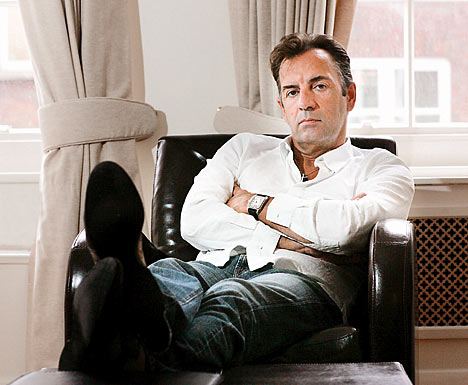
DUNCAN BANNATYNE was brought up in a poor area of Glasgow and left school at 15 for stints in the Navy, on a farm and behind a bar. He was 30 when he went into business, buying an ice-cream van for £450. Within two years he had six vans, but when a newspaper reported a shortage of nursing homes, he decided to build one himself. He set up successful businesses in the healthcare and fitness sectors and now owns a chain of healthclubs.

Everyone seems to be obsessed with finding ‘never-been-seen- before’, ‘cutting edge’, ‘breakthrough’, ‘all-improved’ ideas for businesses that nobody has ever heard of before.

I’ve never patented anything. I’ve never come up with a new idea. Nothing. But I’ve made £168m. So, how does that work? If you want to find a good idea for a new business venture, it’s not about inventing anything. The light bulb, telephone and wheel have all been done before. Don’t beat yourself up trying to split atoms.

Like me, follow the latest trends in all the newspapers. Keep an eye on whatever is getting the most press for a consistently long period of time.

Spot the trends and then follow the yellow brick road. If everyone’s doing it, so should you. The revolutionary concept that nobody has ever thought of before is for your ego, not your wallet.

When Margaret Thatcher was prime minister, she was offering to pay business people to look after the elderly in care homes due to overcrowding in hospitals. Anyone with a brain started opening care homes. So I launched Quality Care Homes and sold it for £46m 10 years later.

Health clubs were happening. Everyone was getting fit. There was an explosion on the scene with Fitness First and Holmes Place. So I launched Bannatyne Fitness.

The appetite was already there and so I knew I was on to a winner. It is now valued at £120m.

Even my first ice-cream business was an idea waiting to happen. I was at a car auction when an ice-cream van came through. It was a ready-made business that I didn’t have to think about.

As far as ideas for businesses go, jump on the bandwagon. This is not to say that you can’t put a unique spin on your new courier service, cafĂ© or cattery. It’s just that if everyone is already talking about it, you know it’s more likely to succeed.

Of course, with any idea, ascertain what the key benefits are first. Be sure your idea is at the beginning of its lifecycle. You don’t want to enter a cluttered market with so many competitors that you can’t see the wood for the trees. Also ensure that your idea isn’t already mature and interest is waning.

Be a little controversial. Tackle something with talk value. And make sure that your idea is part of a trend and not a fad. A fad, like most of the Big Brother stars, are here today and gone tomorrow. A trend has longevity.

Look at the steady growth in demand for organic food. Everyone’s talking about it and demanding it. Organic food is not a fad. We’re not overnight going to start craving chemically enhanced, toxin-enriched battery chickens and hens’ eggs again as opposed to organic ones.

If your business idea is about real chocolate or 100% natural smoothies, you know you’re in good company.

Ultimately, trust your own judgment. You can feel when you’re on to a winner. Don’t try to be too clever. Usually it is your first instinct that’s the right one.

Monday, 25 July 2011

Zoran against the World - Entrepreneurship in Transition


Technologically, it is probably the most advanced printing facility in the Balkan. It cost almost $2.5 million. It was constructed in less than a year. And it is in dirt-poor and war-torn Macedonia.

Behind this incredible tale of entrepreneurship, uncommon in these nether-regions, stands Zoran Rosomanov. A stereotypical visionary - mane, blazing eyes, imposing physique - this man, against nightmarish odds undreamt of by his Western counterparts, constructed, single-handedly, an impressive, star-trek like, factory.

Literally single handedly: digging the muddy soil, hoisting bricks onto cranes, driving earth-removal heavy machinery. He begged, cajoled, and persevered. And he made it. His story serves a lesson to all the forlorn dreamers in the sad countries of the East.

Thirty-six year old Zoran represents a new breed of "can-do" businessmen in Eastern Europe and the Balkan. His philosophy is the outcome of first-hand exposure to Western management techniques and ideology. He does not rely on the state to provide for him or for his enterprise. He actively seeks foreign inputs - in capital, contacts, and know-how. He is well-traveled, polyglot, affluent, a consumerist. He is enamored with technology and gadgets.

Still, he likes to think of himself as a creator, or an artist - rather than a money machine. He emphasizes the design-related portions of his company. He brags of his hobbies: photography, interior design, music. His home and office serve to advertise not his wealth - but his aesthetically-informed talents. He is smartly dressed and well-mannered, indistinguishable from his colleagues in the West. Though he loves Macedonia, his homeland, he is, in essence, a citizen of the world.

Zoran started off as a TV music editor in the Macedonian state-owned channel. The highlight of this brief phase in his career was a human rights concert in Budapest. But he soon discovered his true calling: business. He joined a Belgrade-based musical instruments trading firm as a traveling salesman. At the age of 21, he was put in charge of 185 people as head of the Sales Department.

But Yugoslavia was disintegrating. Yugoslavs lost their common identity overnight and woke up as Macedonians, Croats, Serbs, or Bosnians. Zoran went back to Skopje, where he opened, with his savings, a chain of 11 stores of electronic consumer goods.

But he noticed that how you sell is at least as important as what you sell. He discovered marketing. After a stint of studies in Milan, Italy, he came back to Macedonia and, in 1992 he established "Divajn". "I noticed that everyone in Italy asked me about Macedonia. They were interested. So, I decided to connect people." The company was the first to offer a vertical, marketing campaign-orientated service: from poster ads to sales force, a turnkey solution.

He also noticed that, the paperless office notwithstanding, there was a great demand for paper products. In a typical move, Zoran bought an expensive computer and began to design such products for his contacts. "But I noticed that, following a first satisfactory order, they circumvented me and went directly to the printer".

So, he decided to become a printer as well - by merging with a print shop. He placed an ad and settled on one of the applicants. They have been inseparable ever since. Their joint company, "Bato and Divajn", owns the new facility and Zoran's partner supervises the daily work there. "Wealth is in people - not in money", says Zoran.

His secretary has been with him for 11 years. Miki, the talented head of the pre-press division and quality control, has been working with him for a decade. Zoran values loyalty. He trains his staff personally. Every single one of his 40 workers (soon to increase to 55) has gone through a 6-month period of apprenticeship. Then they are on their own. "I believe in delegating," says Zoran, "though I never lose sight of the details. And I am very demanding".

When the combined business expanded, Zoran needed new machines. He tried to find investors, both domestic and foreign, but failed. So, he approached a friend of a friend in Holland. This guy owned an envelope factory and was interested to sell one of the used machines for a mere 400 thousand DM (i.e., c. $180,000).

In typical irresistible gall, Zoran offered him $13,000 as an advance payment. "I will pay you the rest over 3 years" - he pledged earnestly. "What is your guarantee?" - asked the shocked seller. "Your trust" - responded Zoran. The stunned Dutchman accepted. Zoran paid him back in two years.

This pattern of unmitigated self-confidence, infectious optimism, and non-conformism pervades Zoran's way of doing business. He won an order for a million labels simply by waltzing in and producing samples he scanned off empty beer bottles. He is now the exclusive printer for this brewery.

Last April, as he was visiting another client - his firm supplies all the Macedonian blue-chips - he overheard a discussion about problems with a Slovenian supplier. "If I were to establish my own factory here, will you buy from me?" - he enquired. They said yes - and so did many others. "It was my market research" - he grins. Why import from Slovenia if there is a qualitative alternative in one's backyard? Zoran is a great believer in import substitution and buying local. It is not only patriotic - but it makes economic sense.

He proceeded forthwith to find land. His firm designed the construction project. All he lacked was the printing presses. He had less than $100,000 in cash. He needed another $2.4 million. Others would have regarded this deficiency as insurmountable. Not Zoran.

He decided to get the best equipment money could buy - and that meant "Heidelberg". So, he picked up the phone and called Alexander Hufnagel, Heidelberg's director of East Europe. When he asked to buy on credit, they naturally demanded a bank guarantee. Zoran prepared a business plan and went to Komercijalna Banka, Macedonia's second largest retail bank. He asked for $1 million, partly from IFC funds dedicated to small and medium enterprises.

Macedonia's economy has been in dire straits long before its independence in 1992. Nearly one third of the workforce are unemployed. The heavily-politicized and under-capitalized banking system is largely dysfunctional. Lending to business is almost at a standstill. Zoran's was an unprecedented application.

When Zoran dug the first foundations in an industrial park at the outskirts of Skopje, a civil war between Macedonians and Albanians has erupted. Fighter planes and helicopters buzzed above head and police and army streamed to the Aracinovo, a besieged village, not far from the site. There was palpable panic in the air.

Komercijalna Banka asked for a collateral and Zoran offered the new equipment. "Title will revert to me only when I finish paying you", he explained. Unbeknownst to him he has invented leasing. He then turned around and offered Komercijalna's money to Heidelberg as his equity. After a grueling few days of due diligence, Heidelberg agreed to give him supplier's credit amounting to the rest. They asked to him to guarantee the credit personally. He willingly accepted.

Zoran then proceeded to convince them to establish a maintenance center, replete with spare parts, in his new factory. "I don't charge them rent" - he discloses impishly - "My machines must work 24 hours a day, 7 days a week. It is useful to have a maintenance crew and spare parts handy." The next logical step is to become their representative in Macedonia. "I am working on it. But I want them to provide me with revolving credit to be able to offer financing together with the equipment".

But this financial wizardry has depleted Zoran's resources. He resorted to an old communist stratagem: the barter ("compensation" in East European argot). He traded print jobs for building materials. It was one of the worst arctic winters in memory with temperatures often dropping to way below the freezing point. But construction continued, the shivering workers spurred on by Zoran's personal example.

When the equipment finally arrived, Zoran was presented with a $450,000 bill - for the newly imposed Value Added Tax. In a complex financial somersault, Zoran borrowed against future VAT refunds and overcame this obstacle as well. The NASA-like control panel, the printers, cutters, templates for different cigarette brands - all were finally installed in the half completed structure.

"This is my country" - Zoran toggles an unlit smoke - "It is beautiful. We just need help. I could never have done it without the help extended to me by Heidelberg, Komercijalna, the IFC, my clients. My wife stood behind me. This network of support is indispensable. There can be no entrepreneurship and initiative without it!"

"Aren't you afraid to fail?"

"I have no fear. With all our problems - we still must exist. We must survive. Many say I am crazy - but time will tell who will succeed. You must persevere. If the bank would have said no - I would have gone elsewhere. There is always a solution. My advice: get your suppliers involved. Heidelberg now has a stake and they will refer clients to me. I said to them: you want me as a client? Then give me credit!"

"Operating in Macedonia is not easy..."

"A country should  be run like a business and politicians should act like CEO's. Macedonia has the potential to be this region's Switzerland, though it must concentrate on exploiting its natural endowments: climate and soil. Agri-business is its future. All we have to do is encourage foreign investments by safeguarding property rights and overhauling the court system and law enforcement. We have to learn from foreign investors and emulate them."

"But foreign investors are potentially your competitors..."

He tilts his head back and laughs uproariously:

"The Slovenians tried to arm-twist my clients, slander me, and spy on my operations. I can now easily compete with them in the Serb market. My transport costs are much lower. My machinery is so advanced that I can work for the strictest multinational anywhere from Switzerland to Turkey. We are getting the ISO quality certificate shortly. So, they are scared. What has been my response? I bought more land for future expansion..."

Related Posts Plugin for WordPress, Blogger...

Share

Twitter Delicious Facebook Digg Stumbleupon Favorites More